DIY Spring Chevron Wreath with Pennant Banner

wreath7

With J gone for fleet week, I’ve been staying up far too late, watching Hulu (I started Nashville, not my fave show so far, but it’s alright) and crafting my little bootay off. I may have mentioned in previous posts that I love to decorate for holidays/seasons and made a promise to myself to do so, especially while baby P and any future babies are growing up. So far I have made good on my promise, and although most of my decorations come from the dollar store, it still counts, haha! I recently found myself at a loss as to what to do decor-wise between Easter and Memorial Day/Independence Day, so I decided to leave the inside be and just make another cute front door wreath since I was so pleased with the way my Easter wreath came out. Since I had picked up a few yards of burlap for some larger pennant banners I plan on making, I thought it would be fun to add a teeny tiny pennant banner to my wreath, especially because it would act as a trial one for my future banners. This wreath was super easy to throw together, once I had created my mini pennant banner and fabric flowers, it took me under 10 minutes to assemble the whole thing! The best part is, with the exception of the ribbon and Styrofoam wreath, I used items I already had on hand so the project cost me about $8 – BOOM! Give this one a try, if you don’t want to make the fabric flowers yourself you can always purchase ready made ones at your local craft store (but first read my tutorial on fabric roses and see how easy they are to make!), the rest is easy breezy!

DIY SPRING CHEVRON WREATH WITH PENNANT BANNER

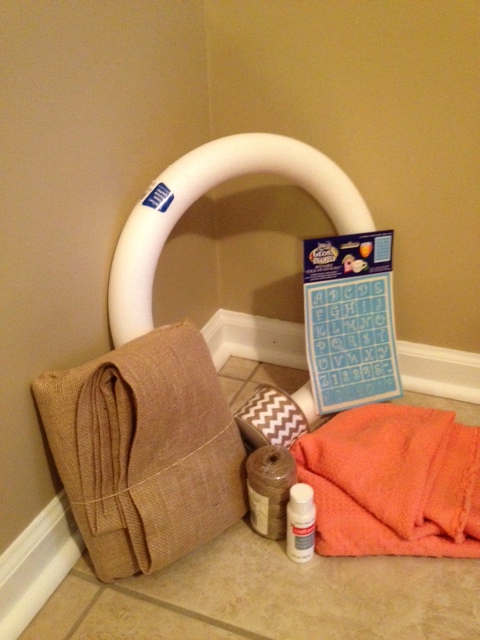
YOU WILL NEED:

wreath6

  • Styrofoam wreath (I purchased mine at Michael’s using a 40% off coupon, download the Michael’s app if you haven’t already, they will scan coupons right off of your phone)
  •  Chevron Ribbon (Mine was wired but it doesn’t have to be, they sell large rolls of chevron ribbon at Walmart for $3.99)
  • 8-12 Fabric Flowers (Tutorial Here)
  • String or Twine
  • Burlap (since the banner is so tiny just ask for the smallest piece they can cut for you, burlap costs $2.97 at Walmart so a 1/4 yard will cost you about $0.75 and you’ll still have left over fabric)
  • White Acrylic Paint
  • Small Letter Stencils (I had picked some up for another project I’m working on but I’m sure the dollar store has stencils that would work)
  • Paint Brush
  • Glue Gun
  • Scissors

INSTRUCTIONS

Step 1: Assemble your fabric flowers by following this tutorial. The amount you will need depends on the size of the flowers you make and how much area you want them to cover on the wreath. If you are using store bought flowers or none at all skip this step.

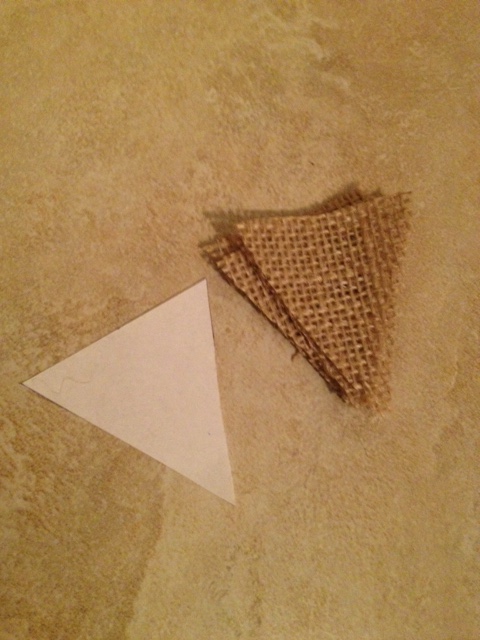
Step 2: Start creating your pennant banner by fashioning a triangle guide out of paper (I used a post-it haha), the size of your pennants will depend on the length of your name or words you are using. My last name is seven letters long and a 2″ wide by 2″ long triangle was perfect for mine. Using scissors, cut out your triangles. NOTE: It is optional to use modge podge or fabric stiffener to seal the edges of your burlap triangles so they do not fray. I skipped this and they are fine.

wreath5 wreath4


Step 3: Once your triangles are cut out, using your stencil, paint and paint brush, carefully paint your letters onto the burlap triangles. Be sure to protect your work surface with a piece of paper or wax paper since the paint will seep through the burlap. Allow a few mins to dry, this is a good time to start working on the body of the wreath!

wreath3

Step 4: Take your wreath and ribbon and attach the end of your ribbon to the styrofoam wreath using hot glue. Keep wrapping the ribbon around the wreath, overlapping the previous section each time, place a dot of glue underneath the ribbon each time you wrap it (I suppose this isn’t totally necessary but I didn’t want my ribbon to move at all once I was finished covering the wreath).

wreath2

Step 5: Your burlap letters should be dry by now. If so, take a piece of twine, ribbon or string and use hot glue to attach your burlap triangles to the string by applying a line of top glue to the back top of each and pressing onto the string, it is best to do this over wax paper so that the glue will not stick to anything. Make sure you leave a decent amount of string before the start of your first triangle so you will have a means to attach that side to the wreath.

Step 6: Attach your banner to the wreath by tying each end to each side, you be the judge of placement and tautness of the string. Once I got the banner tied how I wanted, I used a small dot of hot glue on each side to secure the string (again, overkill with the glue but it can’t hurt right? lol). Now, attach your flowers however you see fit, I alternated sizes and colors but feel free to arrange them however you’d like! The bow is optional, I just thought the top looked naked. Now throw that bad boy on your front door and know you’ve now got the best wreath on da block 😛

wreath

Fabric Rose Tutorial

flow7

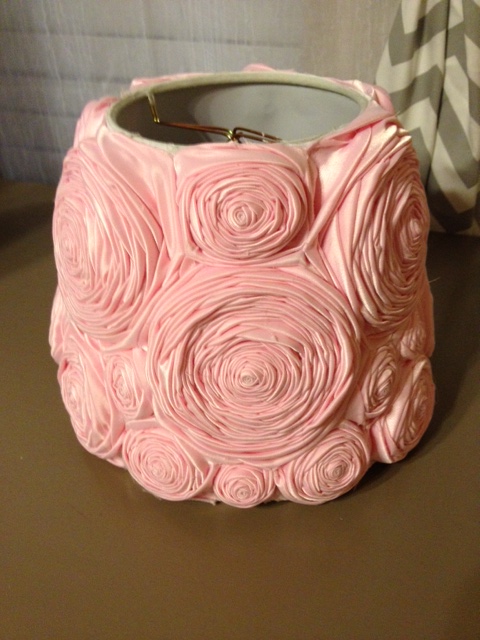
I’m so excited to share this craft with you! These little fabric roses can be used in SO many ways from decor to jewelry the applications are endless, so if you like shabby or cottage chic style decor this craft is right up your alley. I began making these little flowers when I was selling shabby chic style rosette lampshades (pictured below) on Etsy  for a short while. Although I didn’t think my lampshades would drum up much business it turns out they were extremely popular and for the year that my Etsy shop was open I made HUNDREDS if not thousands of these little fabric flowers, so needless to say I’m pretty sure I have it down to a science, haha. Unfortunately, when baby P arrived I had to close down my shop indefinitely, as the lampshade process is pretty labor intensive and I was just simply not going to have the time to devote to the shop with a new baby (hopefully I can reopen it one day!), so now I just make lampshades as gifts for friends and use my little flowers in other craft projects. Since I love a project that can be used in multiple ways, I knew that a lot of my future crafts would feature these little fabric flowers and that is why I’d like to share this tutorial with you! Obviously there are lots of different fabric flower tutorials out there, as well as lots of craft stores that sell them ready-made (but after reading this post I hope you are inspired to make them yourself and save some coin!), so this is just my personal method to my fabric flower madness! I think it’s also worth mentioning that these make great embellishments for just about any decor project (I will give some suggestions below!) and are a great way to dress up something simple if you’re looking to decorate on a budget, all you need is a glue gun and the fabric of your choice! Happy “flowering” (as my husband calls it lol)! P.S. I plan to write a separate post on DIY fabric rose lampshades, so be on the lookout for that!

FABRIC ROSE TUTORIAL

YOU WILL NEED: 

  • Fabric of your choice (anything will work with the exception of maybe organza, tulle and silk where the dried hot glue might show up or wreck the material. The amount of fabric you need is dependent on how many flowers you would like to create.)
  • Glue Gun
  • Scissors

INSTRUCTIONS

Step 1: Begin by cutting your fabric into 2″ wide strips (this is an approximation, just eyeball it, no need to measure the width of each strip).

flow

all of the fabric I used to make these flowers for my wreath was left over from previous projects, the peach fabric was a thrift store find – 2 yards for $1!!!

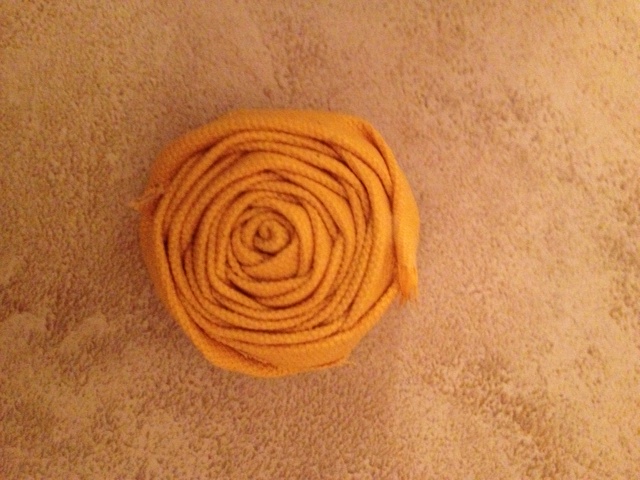
Step 2: Starting with the end of one of your strips, fold the corner down to form a point and use a dab of hot glue to secure it.

flow1

Step 3: Begin to roll your point as if it is a cinnamon bun, then place a dab of hot glue to hold it. Next, begin folding or rolling and turning your fabric simultaneously, placing a dot of hot glue after each fold (or every other fold depending on how tight you want the rose to appear, I do every fold, but if you’re going for a more shabby chic look you can let it appear a little looser). NOTE: For the particular roses shown, as I was folding/turning each piece I was sure that there were no raw edges apparent because that was the look I was going for, if you are looking for more of a shabby chic raw/frayed edge look, instead of “folding” as you turn simply use more of a twisting motion so that there are some raw fabric edges visible on your rose.

flow3 flow2

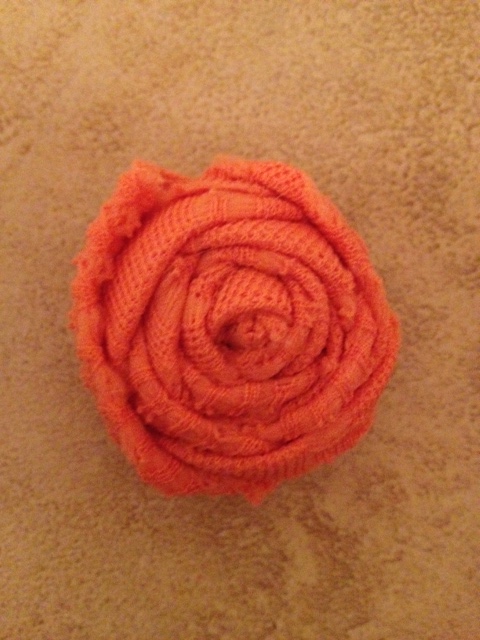
Step 4Once you have reached the end of your fabric use a final dot of hot glue to tuck the tail end of the strip underneath or tight to the side of the flower and you are done! Yup, it was that easy! If you would like your flower to be bigger simply repeat the beginning of step one, but instead of rolling the point into a cinnamon bun, simply fasten it to the side of your finished flower with a dot of glue and continue your folding/rolling and turning process.

flow6 flow5 flow4

Here are just a few ideas for using these roses in decor/fashion (since I have done most of these I will be posting examples of each of the following soon!):

  • Shabby chic lampshade (tutorial coming soon) flow8 flow9
  • Embellish a chalkboard, mirror or frame
  • Create a hair band or bow (perfect for a baby shower gift!)
  • Create a necklace or earrings
  • Embellish a wreath (see my spring/summer wreath post here)wreath
  • Embellish a vintage sign

DIY Little Man Onsies with Interchangeable Bow Ties

littleman

Who doesn’t love a tiny little baby boy dressed up like a man, right? I for one, LOVE dressing baby P up like a man (he’s looked like a little mini man ever since birth, kind of weird and cute at the same time lol), and even before I had met my little guy my Etsy shopping cart was filled with cute little onsies with tie appliques and little bow ties. Only problem was, I quickly realized that at between $25 and $35 a pop (for a onsie, really? lol), my full blown little man wardrobe was going to have to wait until I hit the lotto, haha. Luckily, I was able to find a few little man onsies on clearance and be gifted a few others (a lot of them are featured in his monthly and holiday pictures) but I still was left wishing that there was a cheap way to get my hands on some more little man clothes!

Flash foward a few months, some friends and I are planning a “little man” baby shower for one of our girlfriends who is expecting a little boy. I thought it would be so cute to recreate the adorable onsie clothesline that my girls had displayed at my shower, but with little man themed onsies. Obviously the same problem of these little man onsies being so damn expensive presented itself once again. So I began to wonder if there was a way I could actually make these myself, without them looking like crap, that is (haha) – it turns out there was! Since I don’t sew other than by hand (learning to use my sewing machine is on my long list of things to do lol), it never occurred to me to make these onsies myself, but after a little research on Pinterest and inspection of items I already had, I was able to come up with my own variation of a little man onsie using, cheap fabric, hot glue and my limited sewing skills. So with limited expectations I got to work and was absolutely thrilled with the result of my project and definitely had a few “holy-crap-I-made-this?” moments throughout lol. Not only will I be able to use these at my friend’s shower, but I now have a home-run of a gift for any of my family and friend’s future baby boys (or girl for that matter, these can be hairbows too, say whaaaaat?!). I also plan to make hundreds (okay, maybe not hundreds, but a lot lol) of these for baby P until he no longer wishes to wear bow ties (which hopefully is never since he is a little man, lol), starting with the one he will wear for his Father’s Day picture.

Give this craft a shot! If you have zero sewing skills you can still make it work, I promise! If you need more of a reason than how adorable a little man onsie is then here’s another – a onsie and six interchangeable bow ties cost me about $3.00 when you break it down (compared to an average of about $22.00 per onsie on Etsy, usually including only one bow tie), so cost-wise it’s a no-brainer!!! NOTE: I also plan to make a matching bow tie for J, I just have to mess around with the bow tie tutorial to figure out fabric measurements for an adult bow tie but once I do I will post my own tutorial!

LITTLE MAN ONSIE & BOW TIE

*The use of Velcro or Nylon snaps is totally up to you, if the child is over six months and you know how to sew by hand I would suggest the snaps, as they are less easily removed by the child, lol. Velcro is still fine though, I found that baby P was more interested in the buttons than the bow tie.

MONEY SAVING TIPS:

  • Hit up your fabric store’s remnants bin, a 12X12 square of fabric that cost under $1.00 was enough for me to make about 6 bow ties!!!
  • Since you don’t need anything fancy use the cheapest brand of white onsies you can find, I believe Walmart carries a Gerber brand 10-pack for around $8.00.
  • Use cheap buttons, this works well anyway since cheaper buttons will be more plain and you want the color/style to work well with multiple bow ties.

YOU WILL NEED: 

  • White Baby Onsie
  • Hot Glue
  • Fabric of your choice
  • 2-4 buttons of your choice (amount depends on size of button)
  • Needle & Thread
  • Sew on Velcro or Sew on Nylon Snaps (if you are not planning on sewing at all, you will need to use Velcro)
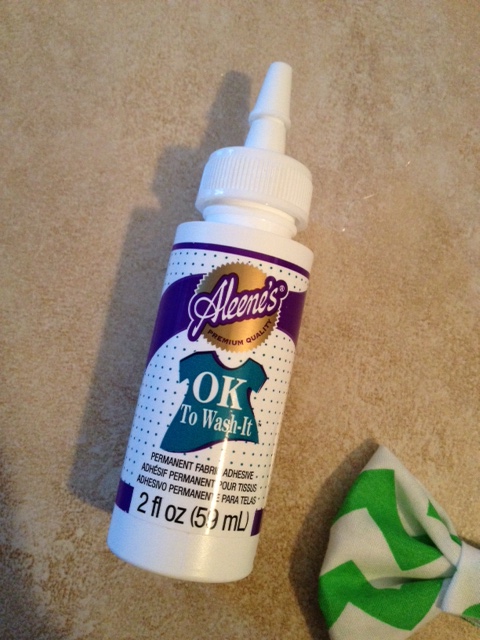
  • Fabric Adhesive (you only need this if you are not sewing at all, make sure the label says “washable” meaning the item can be run through the washing machine after the glue has been used)
  • Ruler or Measuring Tape

INSTRUCTIONS:

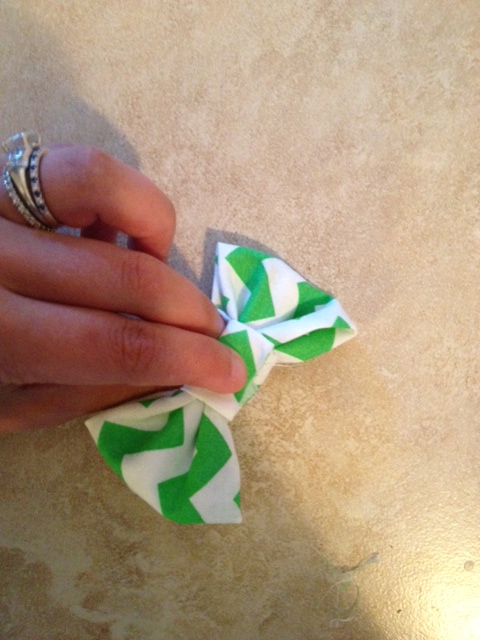
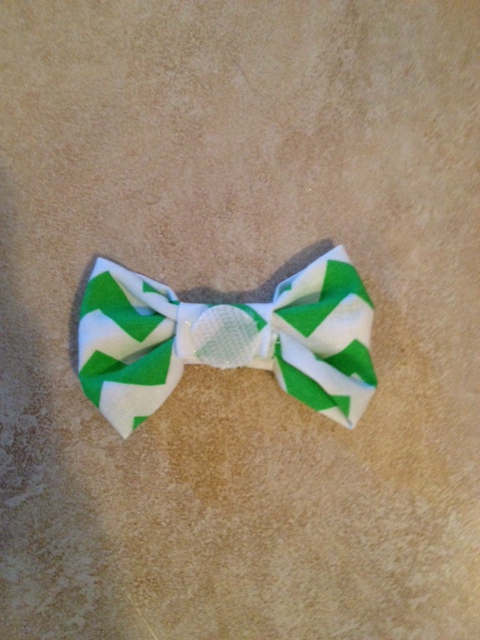
Step 1: Use this bow tie tutorial to create as many bow ties as you want. I used the hot glue method and wherever it said to iron I didn’t (I’m lazy, lol) and my project still came out great. Important Note For Nylon Snap: If you are planning on attaching a nylon button adapt the previously mentioned tutorial to include the following instruction for attachment of the nylon snap. When you are gluing the smaller 2.25X2.25 piece in half place a very small dot of glue on each end and the middle (as opposed to just putting a whole line of glue down the seam), you want a space near the end where glue will not obstruct your needle once hardened. When securing your small piece to bow part of the bow tie, use a dot of glue to secure the one end, then using a needle and thread, sew the half of your nylon snap to the opposite end, so that when you pull it around and secure it, it will be facing out on the back of the bow tie where you would snap it to the onsie (see blue gingham bow tie pictures). Important Note For Velcro: If you are attaching velcro simply follow the instructions for construction of the bow tie to the end, once the bow tie is complete, use a dot of hot glue or fabric glue to attach a piece of velcro to the back of the bow tie. Here are some pictures I took as I went about making my bow ties.

ones4

this is the washable fabric glue that I used to apply the velcro

lm7

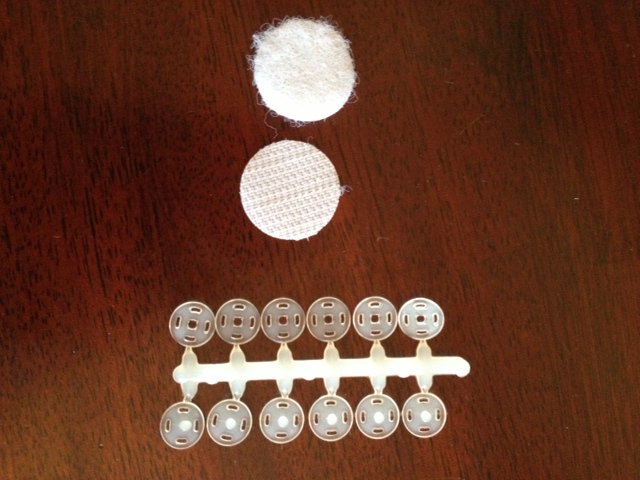
I used velcro dots but if it is cheaper to purchase velcro in a roll or larger piece you can just cut it yourself. The nylon snaps are shown as well, I chose these as opposed to metal snaps because they don’t require a special tool to attach them to fabric.

ones ones1 ones2 ones3

Velcro placement

Velcro placement

ones6

nylon snap method

nylon snap placement

nylon snap placement

Other bow ties not shown on onsies.

Other bow ties not shown on onsies.

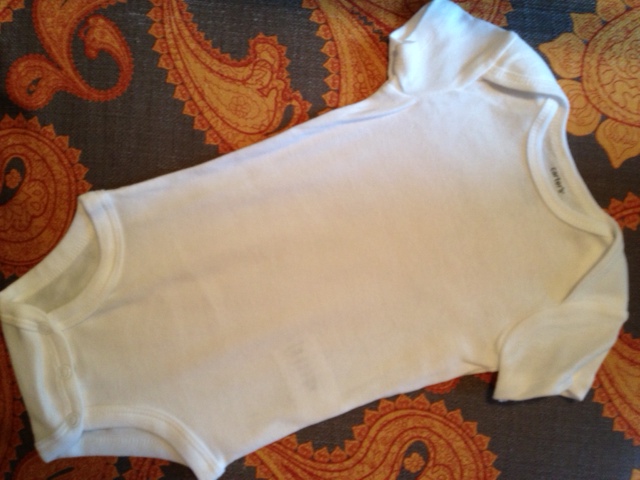
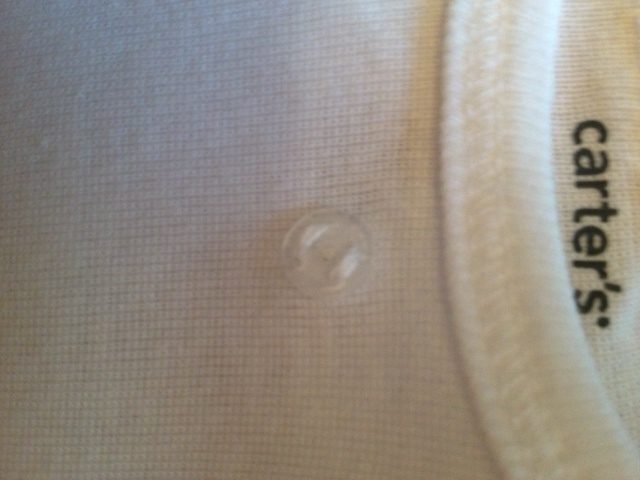
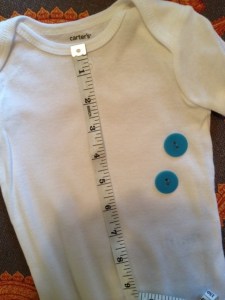
Step 2: Once you complete your bow ties, you are ready to work on the onsie. For Nylon Snap: Find the center of your onsie, I placed mine about 3/4 of an inch down from the top of the neck, but use your own judgement as to what you think looks best. Use a needle and thread to attach the connecting piece of your nylon snap to the onsie. For Velcro (No-Sew): Find the center of your onsie, I placed mine about 3/4 of an inch down from the top of the neck, but use your own judgement as to what you think looks best. Use your washable fabric glue to adhere the connecting piece of velcro to the center of the onsie, it will probably need to dry for about 24 hours. Do Not use hot glue for this part, if you do not use a machine washable glue your velcro will probably fall off in the washing machine. I used a few stitches to secure my velcro after I glued it for further security but if you are going with the no-sew method that is fine too.

ones8

Plain white onsie

ones9

nylon snap placement.

Step 3: After attaching your velcro or snaps, you can work on the buttons. Use a measuring tape or ruler to mark the areas on the onsie where you would like to attach the buttons. I used three buttons for medium sized buttons and two buttons for larger buttons and placed them about two inches apart (measuring from the button center). Use a needle and thread to attach your buttons. If you are not sewing you can absolutely skip this step, the onsie looks just as cute without buttons! I suppose if the onsie is for a newborn or very small infant (aka one that doesn’t have the capacity to pull the buttons off and eat them lol) you could glue the buttons using washable fabric glue, however I have not tried this myself, if you do attempt it let me know how it holds up!

ones10

Ta-da!!!!

Ta-da!!!!

Enjoy your onsie!!! For care turn inside out when running through the washing machine, and for best results hand wash and hang dry when possible.

My squishy baby rockin the onsie!

My squishy baby rockin the onsie!

He seems to be happy with it :-P

He seems to be happy with it 😛

lm2

Glass Etching Tutorial

glasset

So I’ve been MIA from the blogosphere for the past week while my squishy baby and I traveled to NY to celebrate my nieces 1st birthday. We had lots of fun and right before I left I managed to eek out one of my favorite DIY/craft projects that I can’t wait to share with you – glass etching! I have mentioned before that I LOVE crafts and recipes that are super easy but appear really fancy and involved and make people say “you just had a baby how do you have time to do any of this!?” hehe little do they know  ;-). Not only is this craft pretty quick, it’s easy and makes great DIY hostess or holiday gifts, and since wedding season is in full swing, these will also make great bridal shower gifts. This post will serve as the tutorial but you may view my separate post on etched glass DIY gifts (coming soon), where I’ll show you some other variations on this project.

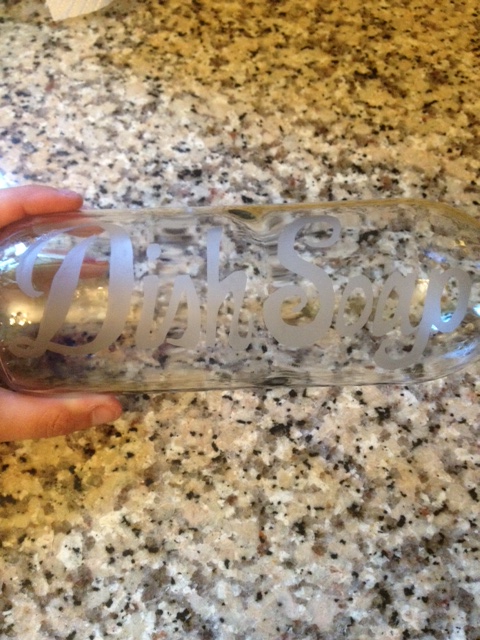
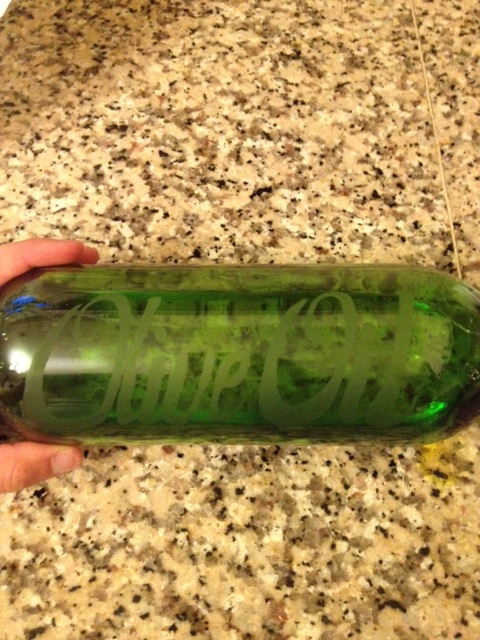
As for these DIY oil and dish soap dispensers, I had gotten sick of dragging the giant container of olive oil out every time I needed just a little bit (and then drowning my food due to lack of a slow dispensing top) and was equally as sick of looking at the gross Palmolive container of soap sitting on my counter, not cute. I had made an ADORABLE olive oil dispenser last year but alas, my pregnancy induced clumsiness caused me to knock it off the counter and shatter it into a million pieces (I cried real tears when that happened lol), so I was eager to replace it! This time instead of buying an actual oil dispenser (which you can totally do, they are available at Walmart and KMart for about $3-$4 a pop) and etching it I decided to repurpose wine bottles instead (yet another reason to love Trader Joe’s Two Buck Chucks!). Since I already had the empty wine bottles all I had to do was buy the bottle pourers (I found 6 for $6 on Amazon, link below). I was super happy with the result and happily left on my trip knowing that I would return to my cute little DIY oil and soap dispensers upon my return! I urge you to give this one a try, especially if you are tight on cash around the holidays or if wedding season has taken you for just about all that you’re worth lol, I promise you your recipient will love this just as much as their other gifts if not more and you will get to feel accomplished and a little less broke 🙂

GLASS ETCHING TUTORIAL

*NOTE: This project includes use of harsh chemicals and sharp objects, be sure little hands are far away if you decide to attempt this.

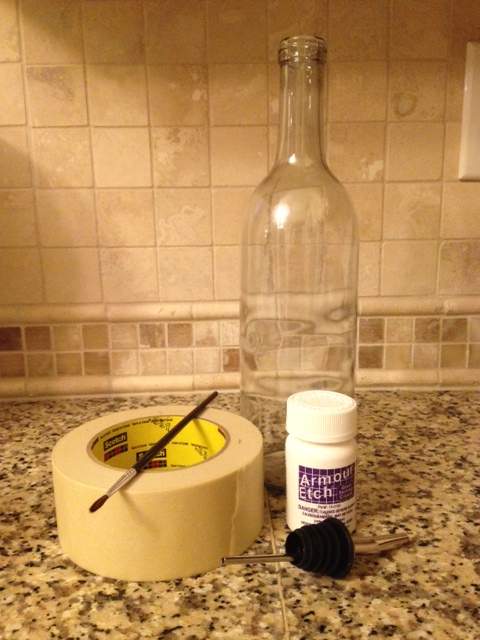
YOU WILL NEED: 

etch

  • Armour Etch or other etching cream (available at Michael’s and other major craft retailers)
  • Empty wine bottle or Olive Oil Dispenser (it MUST be glass, this will not work on other mediums)
  • Dispenser top
  • Paint Brush
  • Latex Gloves
  • Masking Tape
  • X-acto Knife

INSTRUCTIONS:

Step 1: If you are using a store bought piece of glass skip this step. If you are using a wine bottle use either goo-gone or soap and water to remove the label. If you’re using a cheap-o wine like I was you’ll be fine just soaking it in a little soapy water then using the coarse side of a sponge to rub off the label and any remaining residue. When you are finished, wash your bottle with soap and water and dry.

Step 2: If you are using a plastic stencil, skip this step. Place masking tape over your piece as shown, the height and width will depend on how large you want your etching to be. When masking tape is on rub it down firmly with your fingers or use the edge of a credit card to burnish the tape and make sure that it is completely adhered to the glass.

etch3

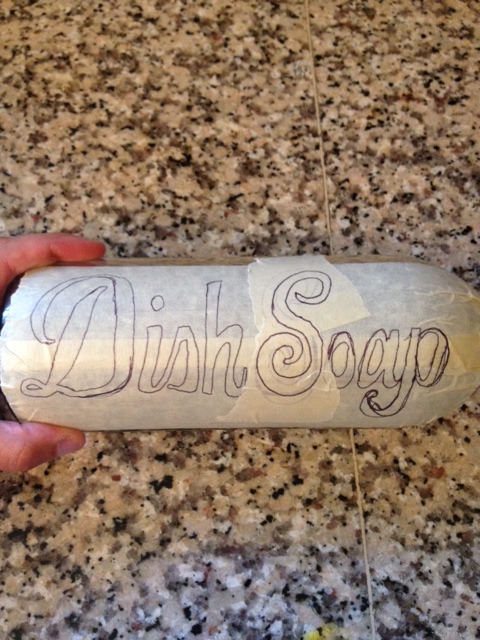
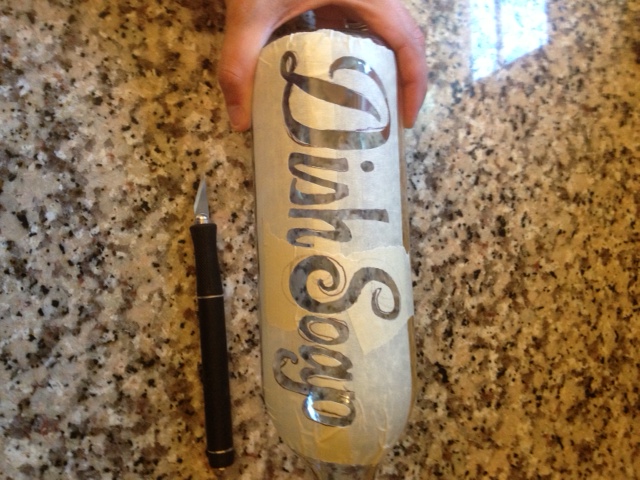
Step 3: For the lettering there are a few ways you can do it.  I consider myself pretty good at hand lettering (hair flip, lol) and didn’t want to be bothered with printing out a guide so I simply hand lettered the wording by looking at the text on my computer. If you’re not comfortable doing that you may either find a font you like print out the wording in whatever size you would like, cut it out and trace around it onto the masking tape or instead of cutting and tracing the wording just tape it over the masking tape and use your x-acto knife to cut the words out (cutting through the paper and the masking tape at once). One other option is to purchase a plastic stencil (sold at craft stores) and tape the stencils directly to the glass and use that as your wording guide, eliminating the use of masking tape and x-acto knife altogether. While the stencil route will limit you in font options, if you feel that you need a fool-proof method that might be the best option for you. *For my font I used “Birds of Paradise” on DaFont.com.

etch4

For whatever reason pencil wouldn’t work on the masking tape that I purchased this time so I had to use pen, the messy parts are where I corrected mistakes. Not too pretty but got the job done!

Step 4:  Using your X-acto knife CAREFULLY cut out your lettering, making sure to leave the centers in letters like o, a and p. If you have never used an X-acto knife the thing is like a friggin scalpel and no craft is worth a trip to the ER so take care in cutting!

etch5

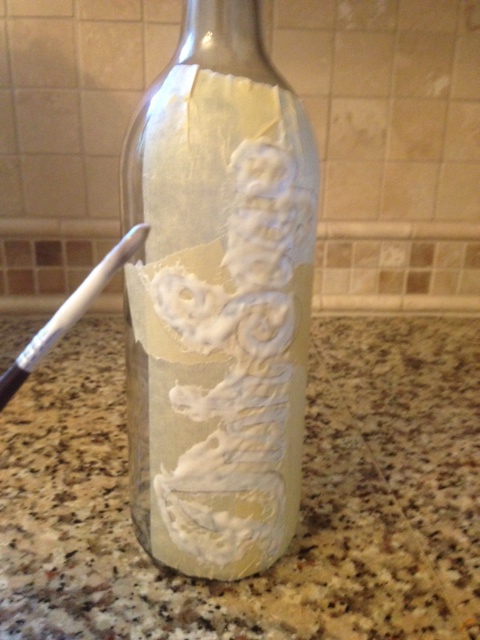
Step 5: If you are satisfied with your little masking tape stencil you are ready to apply your etching cream. NOTE: Obviously since you are using this stuff to etch glass so you know it’s harsh, this is a corrosive, abrasive substance and if it gets in your mouth or in your eyes or stays on your skin for an extended period of time you will calling poison control and heading to the ER, you do not want this, so wear gloves and work very carefully – you have been warned lol. That being said, use a small paint brush to apply a generous amount of the etching creme to your stencil, I glob it on there, don’t worry about wasting it because that tiny bottle has lasted me about ten projects and is still not empty! Once you have covered your stencil wash off your brush and set your timer for 15 minutes. NOTE: The bottle says to leave it on for 4 minutes, I found that to be far too short of  a time and 15 seems to work best for me so that’s what I suggest.

etch7

Step 6: When time is up, put on latex gloves and rinse your piece off in warm water, using your gloved fingers to peel off the masking tape as your rinse it. Once all of the etching creme is washed off, remove any remaining masking tape and re-wash your piece this time using soap and water. Dry it off an voila, you’re done!!!   These make amazing gifts and people will not believe that you did it yourself! *If you are making an olive oil or soap dispenser here is the link to where I purchased the little dispensing tops on Amazon.

etch8

  Sorry the quality of this photo is terrible but you get the idea, lol.

etch10

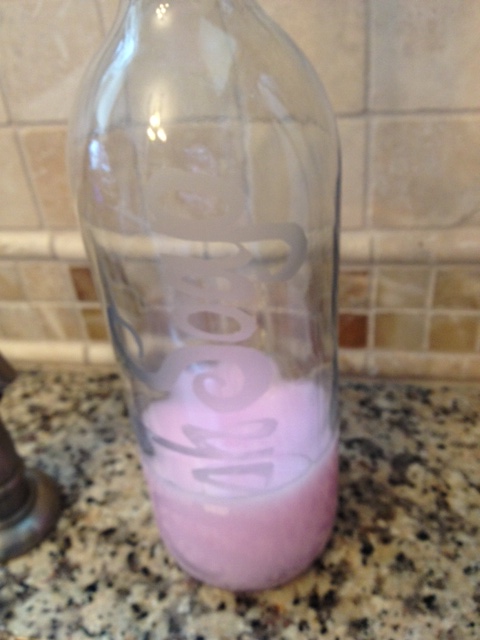
The pink soap in the clear bottle makes it hard to see the lettering so I am going to buy a clear soap next time.

etch2

Since I am yet to create my post on DIY etched glass gifts I will give you some quick ideas. While the possibilities are endless here are a few that I have done or plan to do:

  • Bottle of Wine with personalized etched wine glasses
  • Olive Oil Dispenser gifted with a bottle of specialty olive oils
  • Soap Dispenser gifted with some fancy dish soap and dish towel
  • Personalized mixing bowl gifted with some cake mix, mixing spoons etc.


DIY No-Sew Pennant Banner

pen8

So if you’ve seen my post on DIY holiday photos with my squishy baby, you better believe I was going to do a Mother’s Day pic with P as well :). Let me entice you into doing this craft by saying, it cost me about $3.00 (and depending on how often you craft and the supplies you have available, it very well could be free).  Since there aren’t any real Mother’s Day props, this sparked my idea for a DIY pennant banner – simple and spring-y and able to double as both prop and springtime home decor! This project is super quick and easy (no sewing, yay!) and only cost a few dollars to make. The finished product was super cute and made the perfect backdrop for my Mother’s Day photo, I liked it so much in fact, I will definitely be revisiting this project next time I need some quick party decor and especially when I have to decorate the next nursery! Speaking of party decor, if you’re into pennant banners, check out my friend Courtney’s DIY chalkboard pennant banner that she made for her son’s first birthday party, it’s adorable as is her blog! Here is how I made and used my pennant banner:

YOU WILL NEED:

  • Fabric of your choice (the amount depends on how long you would like your banner to be)
  • Fabric stiffener (available anywhere fabric is sold, if you are using a stiff or heavy fabric you may not need this)
  • Glue Gun
  • Ribbon of your choice
  • Scissors
  • Wax Paper (optional, it is just so you have a surface to work on)
pen

TIP: I hit up the remnants bucket at my local fabric store and purchased these random 12X12 squares for less than $1.00 each. If you don’t have a print/fabric preference you can use an old clothing item or one that you purchase from a thrift store.

INSTRUCTIONS:

  1. First, create a pattern for your pennant in whatever shape you would like. I chose a traditional triangular shape and using a ruler and a blank piece of scrap paper, drew a triangle 6″ wide and 7″ long and cut it out using scissors.
  2. Next, lay your fabric print side down and using a pen or other writing instrument, trace as many triangles as necessary onto to fabric, then cut each one out. pen1
  3. Arrange your fabric on the wax paper (or other surface) and spray each one with an even coat of fabric stiffener. Mine was the “quick dry” kind so it only took about an hour to dry, mine also gave me the option to put it in the microwave for 30 secs to speed up the drying process but I didn’t feel like doing the extra work, but if you are in a rush the microwave is apparently a drying option. Also, as I mentioned above, fabric stiffener is not vital to the project, but because I was using a lightweight material I wanted to be sure it laid flat and stiff when hung.

    pen2

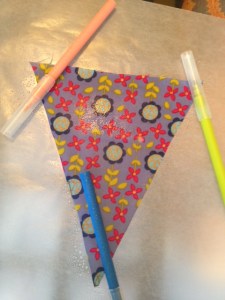
    Don’t mind the markers, I was just weighing down the edges for the pic.

  4. Once your pennants have all dried, lay them face up, tip to tip on a piece of wax paper. Heat your glue gun then, working one by one, apply a thin line of hot glue to the top of each triangle and then apply your ribbon pressing down firmly (be sure to leave enough ribbon length before the start of the first pennant for hanging). Once you have finished display however you would like! See my example below of how I used it for a photo prop and be sure to read my post on baby P’s Mother’s Day pic and his other holiday picspen4

    pen6

    Here is my most adorable squishy baby hangin out under my banners! Check out my post on baby P’s Mother’s Day Pic to see how I added the lettering using only my smart phone!

DIY Chalkboard – No Chalk Paint Required!

mirrrrr

As much as I love to craft and create, the easier the project the better! I love chalkboards and had been searching for one to display in our kitchen as a menu/note board for quite some time. Problem was, anything I was finding on Etsy or at local homegoods shops like Marshalls was way too expensive for my decorating budget. After hopping on Pinterest and seeing what my DIY options were, I found that most people were using either old frames or mirrors and inserting a piece of plywood painted with chalk paint or simply painting over the existing mirror with chalk paint. I knew this would be perfect since I had two dresser mirrors left over from my repurposed entertainment center, good thing I resisted my husband’s pleas to take them to the dump every weekend, my subconscious must have known I would be able to reuse them somehow, haha! I began this project while snow-bound during our “snow storm” aka 3″ of snow which is nothing to us northerners but apparently here in the south it was enough to get my hubby a week off of work, lol. After inspecting the mirror I was going to use I decided to go with adding a piece of chalk-painted plywood instead of painting over the mirror since the existing piece was super heavy and I have a phobia of hanging super heavy items on the wall with a soon-to-be-crawling baby in the house. I removed the mirror from the piece (very carefully!) and disposed of it, left with only the wood frame I prepped it to be painted (see my tutorial on how to paint wooden furniture here). After finally getting out of the house (4 days inside is NOT fun lol), I headed to Lowes to pick up my sample size paint (I used Farmer’s Market by Valspar to match our dining chairs), chalk paint and plywood. Here’s where the “no chalk paint required” part comes in, the craft gods must have been smiling upon me that day because Lowe’s saw was broken so they were going to be unable to cut my plywood to size, so I decided to go to Home Depot instead. There as I was picking out my piece of plywood in the lumber aisle I found that they had pieces of plywood that were ALREADY CHALKBOARDS, WHAAAAAAAT??!!! I was so thrilled! This was amazing since it eliminated quite a few steps in making my chalkboard, now all I would have to do was paint my frame and glue the board in place. I even saved some coin since the chalkboard only cost about $9.00, and the chalk paint alone would have cost $9.00 in addition to whatever the plywood would have cost me, I still have quite a few pieces left over for future chalkboard projects. This was a fun and easy project and is great for birthday boards, menu boards, you name it! Here is my tutorial:

YOU WILL NEED:

  • Mirror or empty frame
  • Chalkboard cut to size (available at Home Depot here, they cut it for me for free)
  • Latex Paint or spray paint (if repainting frame)
  • Black Foam Brushes (if repainting frame using latex paint)
  • All Purpose Crafting or Wood Glue (preferably something that is fast-bonding, but as long as it dries clear and works on wood, you’re good to go).


HOW I DID IT:

  1. If you are using an empty frame, go right to step 2. If you are using an old mirror, CAREFULLY remove the mirror from the frame. Mine was not secured with any adhesive so it came out easily. I do not recommend busting up the mirror, I’m no health professional but I do know that nobody wants a DIY project to land them with a hospital bill, which WILL happen if you cut yourself with a piece of mirror glass or drop a heavy mirror on your foot. You have been warned lol.
  2. If your frame is wood you can follow my steps for repainting wooden furniture using latex paint here  . If  your frame is metal or even if it is wood, you can hit it with spray paint if you’re looking to save time. My frame was very think and ornate so I painted it using my latex paint method, but since the piece wasn’t going to see much action I cut down on the dry time allowing only about 6 hours between coats, then using 2 coats of polyacrylic as a top coat.
  3. Once your mirror is painted and dried, you are ready to glue in your chalkboard. Apply a line of glue to the inside of your frame where the board will sit, then insert your board, pressing down hard (I used a tackier glue so that it wasn’t running all over the place and I made sure that after pressing it in I turned it over to wipe up any glue that had gooped out onto the front). Allow the glue to dry for the recommended time and you are done! Check out my before and afters below.

mirroba

Here is my before and after of the mirror. You can see from the before pic why my husband wanted to throw them out, what the heck were we ever gonna do with these things? lol I didn’t include the cost of the paint because technically I purchased it to use on a bigger project that I am working on. The color is “Farmer’s Market” by Valspar. COST: ~$9.00

mirrorblu

Since I had an extra mirror and I’m an awesome sibling haha, I made one for my sister’s apartment to match her jungle-y printed chairs. I used a sample size of “Painted Parrot” by Valspar. COST: ~$3.98


Repainting Wooden Furniture – Latex Paint Tutorial

securedownload

My obsession with repainting furniture was born when we moved into our new home. Trying to furnish a large house on a small budget was presenting us with quite a task, so I decided to get creative. After experiencing success using gel stain on the dresser I repurposed (see my tutorial here), I decided to redo two chests for our bedroom (since our dresser and all the closets in our home still weren’t enough to house all of my clothes lol). I located one at a thrift store for $35.00 and another on Craigslist for only $15.00!!! Since both of the chests were going to be used in our bedroom, I painted them black to match our bedroom furniture, not too exciting in the creativity department but they look great in the space!

My next wooden redo (and the mother of all projects) was a super long dresser that I repurposed as an entertainment stand/center for our living room. This is probably my favorite redo yet. Given what it looked like to begin with this came out amazing and I am so proud of it! I spent quite some time looking for a piece that would work as our living room entertainment center, everything I was finding was too small and the ones that did fit my size requirement were too pricey. I finally located a long ornate looking dresser at one of our local thrift shops and knew it would be perfect, especially for the price – it was only $85.00! Yet again, I am sad to say that I do not have step-by-step pictures of these projects but I will do my best to explain in detail, check out my pics below for before and after images of all three projects. Here’s how I did it:

YOU WILL NEED:

  • Sanding blocks or sandpaper (100-150 grit)
  • Latex Paint (I use 8oz sample paints available at your local home improvement store, I talk about them here). *Note: when possible purchase a flat latex paint (it will adhere to the furniture best and resist chipping), that is what I used on the black dressers. If you are purchasing sample size paints they are only available in satin finish which I’ve found to work just fine.
  • Wood Filler (if you need to patch any holes or cracks)
  • Clear Top Coat (gel or polyacrylic)
  • Black foam brushes
  • Drop Cloth
  • Rags


HOW I DID IT:

  1. First, I removed all hardware, to include the pulls and any metal pieces that you will either discard or replace after the fact.
  2. Remove the drawers. If your piece of furniture is super dirty, wipe it down with a little soapy water using a rag. This is not a super important step, I only did it to one piece that had some kind of sticky residue on it. You’ll find that sanding will remove most dirt anyway.
  3. Next, begin sanding (I always do steps 3 & 4 outdoors to keep my indoor workspace clean). I don’t go nuts with sanding, my goal is simply to remove a good amount of whatever varnish or clear coat is original to the piece, I don’t try very hard to get it down to the wood grain, I find this is only really necessary when re-staining a piece. I sand for about a minute on each surface, paying attention to the edges and grooves. My repurposed entertainment center had some very ornate designs on the front, I didn’t bother sanding inside every groove since they wouldn’t be exposed to getting hit or bumped into once the project was complete.
  4. Once you have finished sanding, take a damp rag and wipe down the whole exterior of the dresser and drawers to remove any sanding dust. I also take the time to vacuum or dust out the insides of the drawers since you don’t want any dust sticking to the paint once you being the painting process. After the wet wipe-down is complete dry the piece off with a dry cloth and you’re ready to begin – YAY!
  5. I set up my painting area so I have plenty of room to move around and be sure that all of my work space is covered by a drop cloth of some kind. Begin your first coat by using a foam brush to apply an even coat of paint, when painting furniture always paint in the direction of the original wood grain, not against. Since you will be allowing 12-24 hours dry time in between coats, feel free to wash and reuse your foam brush.
  6. After you have finished putting the first coat on all of the pieces you are finished for the day. At this stage it’s not going to look good at all, don’t worry, it will get there!!! If you are using a flat paint it is going to look very streaky and uneven, this is fine, any places where the light hits the paint weird will be covered by the top coat. I allow 12-24 hours between coats, so I will generally return to the piece the same time the next day to apply the second coat, this makes it a great after work project or naptime project for all you fellow mamas out there!
  7. The amount of coats you will require for each piece will depend on the color of your paint choice. For instance, the black dressers required only two coats, where as the long dresser required three coats. I must note that I do not sand in between coats when painting or when applying my top coat, many tutorials (and the outside of the top coat can lol) will tell you to do this, I just found that it was an extra step I did not need but feel free to add it if you want, it won’t hurt! After your final coat is applied and dry you are ready to start your top coat. Take a black foam brush and begin applying the clear coat in an even layer using even brush strokes, be mindful not to leave behind any bubbles (sometimes the polyacrylic will do this, just go over the area with your brush) and not to allow the clear coat to pool at the edges of the piece. I generally apply three top coats, allowing 12-24 hours dry time in between coats. *Note: For wooden furniture I am partial to the gel top coat, I have found it to be super durable and easily cleaned, but if you are not comfortable using oil based products then a polyacrylic is a good substitute.
  8. The final step is replacing the hardware. For the two chests, I purchased new pulls (here is a link to the exact ones I used, available at Lowes), I got a little obsessed with the farmhouse pulls lol. If the original pulls are in good shape, which was the case for my repurposed entertainment center, simply clean and reuse them or update them with some spray paint (I use a black Rustoleum satin finish spray paint when repainting my pulls).
  9. You’re finished! Do a touchdown dance and get ready to blow peoples minds when they ask you if you got your piece at Pottery Barn (which has happened to me!) and you tell them “no, bish, I MADE THIS!!!” 🙂

BEFORE & AFTERS:

chest2

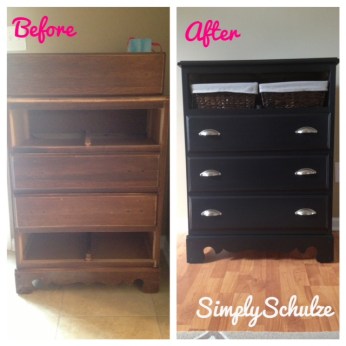
This is one of the chests that I redid for our bedroom (sorry the before picture is so crappy, I had already removed the hardware and sanded the piece before I remembered to take one). I found this one on Craigslist for $15.00 which was amazing because it was in great shape! I half thought it was a ploy that would lure me to my death, but for a $15.00 dresser I was going to take my chances haha jk. I used flat black paint (any brand will do, black is usually sold pre-mixed in the paint aisle but you can also have a sample sized tinted to black if you don’t want to purchase a pint) and the General Finishes Gel Top Coat. Follow the link I mentioned in the tutorial for the pulls I used, I purchased them on sale but according to Lowes website they will run you about $3.30 each, still not bad price-wise but not necessarily a bargain so try for something cheaper or repaint the existing hardware if you’re working with a tight budget. The baskets I purchased at Michael’s on sale for about $4.00 each. This piece has held up extremely well, I have moved it, bumped it and put drinks without coasters on it and it has proved super durable and easy to clean. COST: ~$35.00

chest

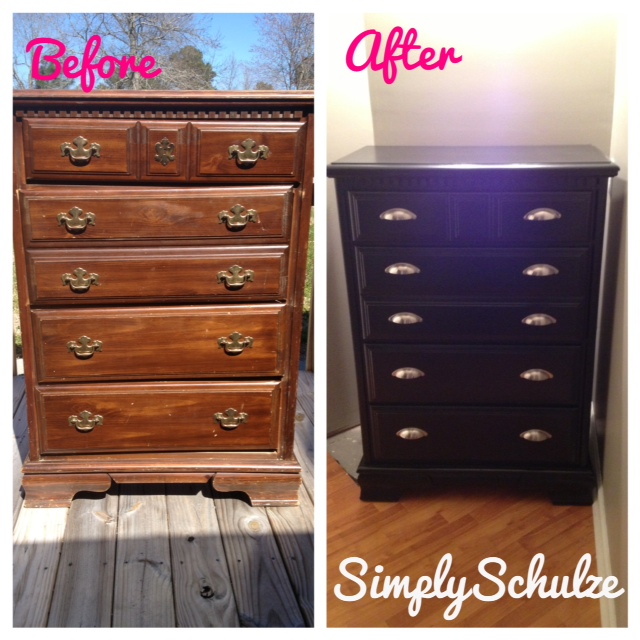
After redoing the $15.00 chest mentioned above, I decided I needed one more small dresser to contain the rest of my shirt overflow (yes, this dresser contains only shirts and not even all of them lol). I was excited to find this dresser for $35.00 at a local thrift store, albeit a little bummed that I wasn’t going to be getting too creative with it since I wanted it to match the other chest in our bedroom. Since my husband said I was getting a little “basket crazy” lol I decided to leave all the drawers in tact on this project. As you can see I just removed the weird metal emblem (if you encounter one of these on your projects just wedge a flathead screw driver underneath and it should pop off fairly easily, then just patch the holes with wood filler) and replaced the pulls. Unfortunately I spend about $25.00 on pulls for this dresser but it was all made worth it when the realtor that was touring our home pointed to the dresser and dead serious said “Pottery Barn right? I think I saw that there.” I was super flattered and he couldn’t believe that I had made it! Like the piece above, I used a flat black paint and General Finishes Clear Gel Stain. This piece has held up great as well. COST: ~$60.00

living2 livingroom


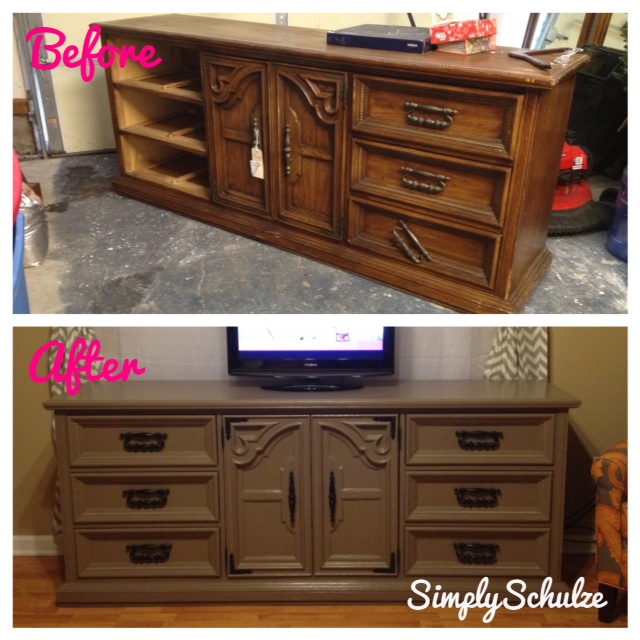
This piece is my favorite redo so far! It is also my Everest lol This beast is over 70 inches long, weighs as much as a car (at least that’s what it feels like lol) and has nine drawers (the same amount of months pregnant I was when I took on this project lol), needless to say this one was quite the project but my hubby helped me a ton so he deserves a lot of the credit :). After we decided to move our TV stand into the nursery I was on the hunt for a new “entertainment center” and by that I mean a dresser whose drawers could house the Xbox, cable modem, DVD player and all the wires. The issue I was faced with was the fact that for the length I was looking for (something that could eventually accommodate a 55″ TV, not the dinky one pictured above), I was only finding dressers that cost upwards of $200.00. After about a month of trolling the local thrift stores and Craigslist postings I came across this gem for $85.00, I was super happy that J trusted my vision on this one because it looked rough lol. As I mentioned before it weighs about as much as a house, it took three guys to load it into my car (which it was too long for, we had to drive with it hanging out the back, haha), and since I couldn’t participate in any of the lifting when we got home my hubby had to just shove it out the back of the car and hope that it didn’t shatter into a million pieces (it didn’t lol). On this particular piece I used “Borough” by Valspar and General Finishes Gel Top Coat (which was a total bitch because in fear of my child coming out with five arms, every time I put on a coat I would have to leave the house for hours because of the fumes lol). If you notice from the pictures, we repainted the original hardware using a Rustoleum black satin spray paint, they are still in good shape and haven’t faded or chipped at all. Lastly, my hubby drilled holes in the back so that all the wires could connect to the electronics inside the drawers while remaining out of sight. This piece has held up great, since P’s arrival I am constantly bumping it with toys and rockers and what have you and it is yet to chip! We feel bad for the movers that will have to transport this beast to our next home, but we love it!!! I almost forgot to mention, this piece came with two hideous mirrors that the thrift store basically forced us to take even though we told them we didn’t want them, check out my easy chalkboard tutorial to see how I turned them into a neat DIY project! COST: ~$95.00


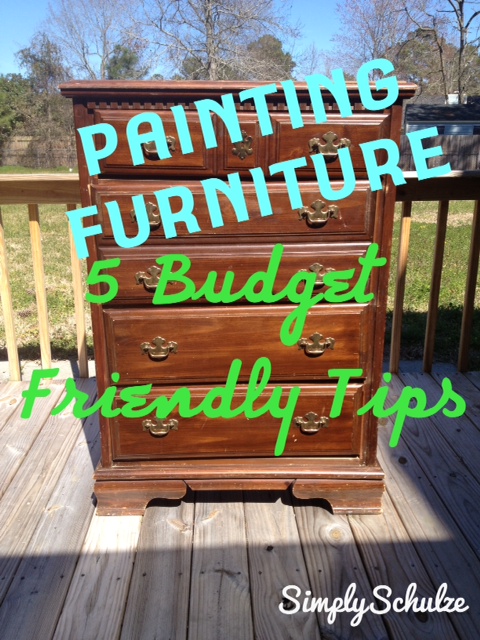
Budget Friendly Tips For Painting Furniture

tips

1. CRAIGSLIST -Check out your local Craigslist ads for furniture! I always hit Craigslist before thrifting because you have more negotiating power with a private party than with a thrift store, especially if the item is on consignment. The dresser I re-did for P’s nursery was a Craigslist find, the guy was asking $85 but I got it for $45! Also, if you’re lucky enough to live in a big city people are always getting rid of furniture for FREE whether it be on the sidewalk or in the “free” section on Craigslist, take advantage of this, I have lots of friends who have furnished full apartments using furniture that was being thrown out!

2. LOOK FOR QUALITY – … Or at least what was quality in the 70s or 80s lol. Go for solid wood pieces, while a laminate dresser at a thrift shop may seem like a great buy at $20 when a solid wood one might be $60, opt for the wood piece – it’s still a great buy and you will end up with a finished product that will last a lot longer and that you’ll love for a lot longer!

3. DO IT WITH A FRIEND –  Try to get some friends together that want to redo some things too! You can save money by sharing supplies and the job is much less tedious with some company and cocktails (limit the cocktails for better results, just sayin lol).

4. PREP WELL & TAKE YOUR TIME – You are most likely to get a good finished product if you take the time to prep your furniture well (sanding or priming) and don’t rush. I find that the key to a good finished product is LOTS of dry time, I allow about 12-24 hours between paint coats.

5. GET CREATIVE – There are so many options for repurposing a single piece of furniture, it’s crazy! Don’t pigeon-hole yourself into an idea, if you find something at a good price and it isn’t quite what you were expecting, try to think of how you could design it to better fit your style, if the drawers are strange looking or damaged maybe add baskets instead or if the pulls are ugly add new ones. Also, do not dismiss things that are dirty or defaced, some of my pieces have had toddler scribble all over them – dirt can be cleaned and writing/scratches will be covered by paint anyway. My favorite piece in my house (and cheapest for the size) I was so unsure about because it was super unique looking (not necessarily in a good way lol) and pretty dirty but I ended up getting three awesome projects out of it!

GOOD LUCK! CHECK OUT MY FURNITURE PAITING TUTORIALS!


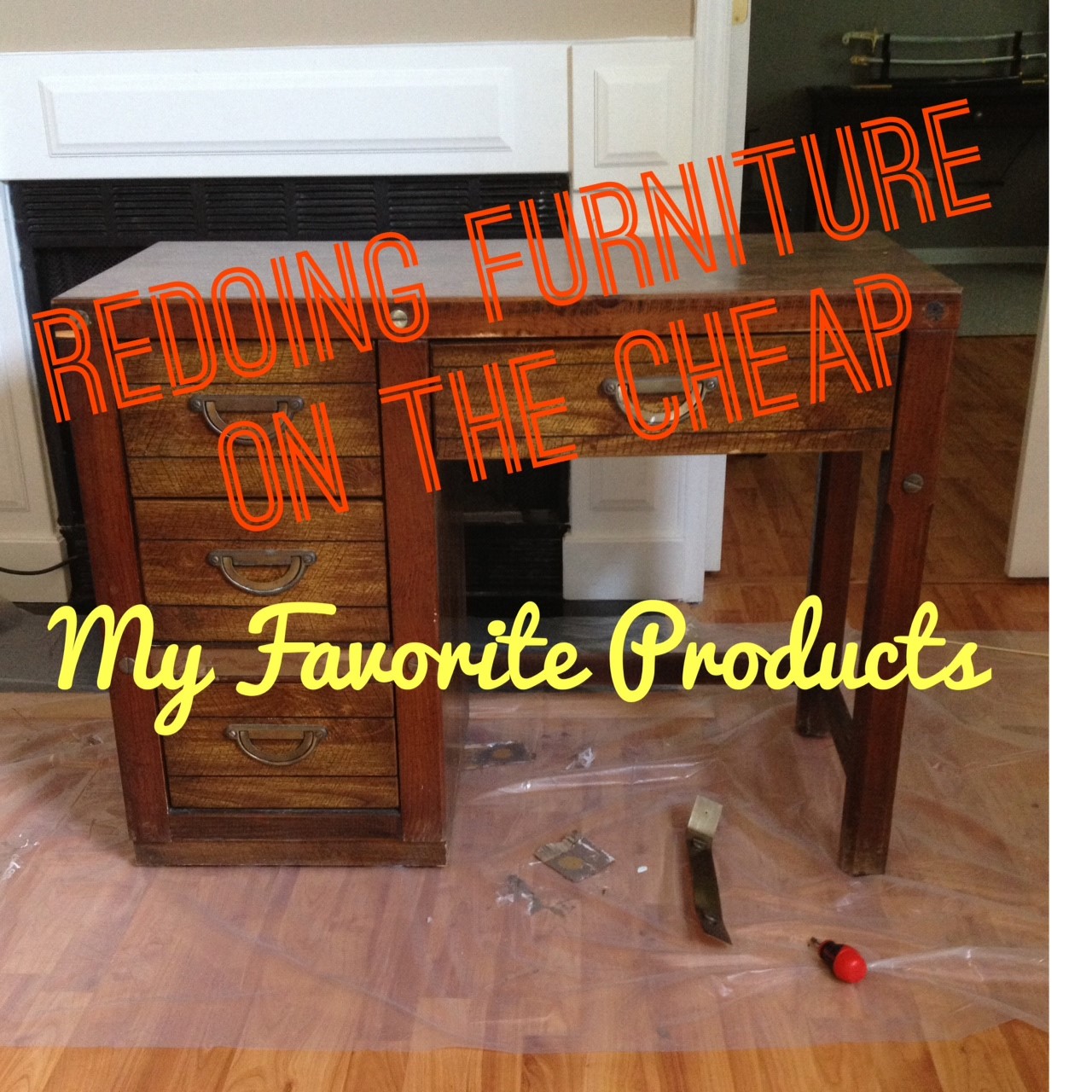
Redoing furniture on the cheap – my favorite products!


funr3

Some of my favorite projects have been my furniture re-dos. I love being able to see the finished product sitting there in my house each day as if to say “oh, hey lady, good morning, remember when you made me for $30? Yea, you’re awesome!” lol. My interest in refurbishing furniture was sparked by our move to our house here in Jacksonville. Up until  then we had been living in a one bedroom condo with little need for much more furniture than the few IKEA pieces we’d purchased when we moved in. Suddenly we found ourselves living in about triple the square footage with our tiny condo’s worth of furniture at hand. Having seen a few things on Pinterest, I figured I’d give these re-dos a try. So I hopped on Lejeune Yard Sales (our local version of Craigslist) and found a few pieces for  a few bucks and an obsession was born, haha.

Now I consider myself a novice furniture re-doer (is that a word? oh, well lol), I won’t say expert because I’m sure there are actually experts out there that will read this and cringe at my use of sub-par products and corner-cutting techniques, which brings me to my next point. My goal from the beginning has been to re-do my pieces on a budget, so I try to use products that are readily available at local home improvement stores at a low price point. Should I ever decide to re-do furniture for resale I would consider more expensive products, however, until that day my ways have worked for me and I’m sticking to ’em! Here are some of my favorite products (in no particular order) that I’ve used on many of my projects and while some are rather obvious, it will be easier to refer to this list when posting individual tutorials.


1. SANDING BLOCKS – I don’t to a ton of sanding on my pieces, just rough them up a bit and try to get any existing varnish dulled down. If you’re just looking to re-do an old piece you purchased for a few bucks or looking to upgrade and existing piece of old furniture, you probably don’t want to invest in an electric sander that you’ll probably use once. I happen to own an electric sander but I HATE that it generates so much dust and I find that sanding by hand has been fine in terms of how well my pieces have held up. These sanding blocks are easy to grip and great for giving a quick sand with even pressure as opposed to regular sheets of sand paper. I usually buy a 6-pack of 100-150 grit at Walmart or Lowes for about $6 (I found a 3-Pack here on Amazon for $7.30), tthese are great because they are reusable so a few will last you a few projects.

2. WOOD FILLER – This won’t be necessary for every piece, but for instance if your dresser comes with some weird metal piece that you’d like to pop off before you paint, this will fill the holes left behind. Additionally if your piece has any damage to it, such as deep cracks, dents in the wood or imperfections that can’t be fixed with sanding, this will do the trick. If you want to get supper crafty and change a two-pull dresser to a single knob just fill in the old holes with wood filler and drill new holes. Once you paint over it you will never know there was a hole or ding! Also, this tube is cheap and will last for many projects (I think I’ve been using the same tube for a year – impressive!!! lol). I usually go with the “natural” color, but it doesn’t matter what you choose as long as it’s paintable.

Carpenter's® Interior Wood Filler Natural -3.25oz

3. GENERAL FINISHES GEL STAIN – This stuff is awesome! It is technically a stain but goes on like paint. I originally used General Finishes which I purchased here on Amazon after seeing a tutorial recommending this particular brand (pictured below is my before and after of the dresser I re-did for P’s nursery and here is the tutorial). That being said I’d like to point out that recently Minwax has started making gel stain available in a variety of colors and is available at local home improvement stores, if you’d prefer to just buy it in-store as opposed to online. I prefer gel stain to regular stain because of the simple fact that it is so easy to work with. Regular stain is messy and requires a LOT of prep work and sanding which I am just too lazy for lol. That aside, I think that the gel stain gives it a more modern look. I also love the gel clear satin top coat (also available here on Amazon), it’s a little pricey but well worth it, when stored correctly a pint will last you MANY projects. NOTE: These GF products are not low VOC meaning that you will require lots of ventilation while doing your projects, no shutting yourself inside your garage for hours on end in the dead of winter, you need mask on, fans going and windows open! That being said breathing the stuff for a bit won’t kill you or but if zero or low VOC or eco-friendly paint is important to you please disregard this product recommendation.

4. FOAM BRUSHES  – Okay this is kind of an obvious one lol but painting furniture with regular paint brushes will leave brush strokes. These foam brushes will put on a nice even coat of paint are easy to work with. Best of all they are SUPER cheap so you can buy a bunch and don’t have to worry about cleaning them in between coats, just chuck it and use a new one when you return to the project later. I have also used 4″ foam rollers designed for painting cabinets but only because I already had them from my cabinet re-do, it wouldn’t really be cost effective to buy a small roller set just for a dresser or what-have-you since you will still end up needing foam brushes for the corners, edges and grooves. Like I was saying, I always keep a ton of these foam brushes on hand since I end up using them on so many crafting projects, I purchase the 2″ ones at either Lowes ($0.79 ea) or Walmart ($0.47 ea).

5. BONDING PRIMER – This product comes in SUPER handy when refinishing laminate or fiberboard furniture. That being said, when possible try to stick to refinishing solid wood furniture, the finished product is much more durable and looks a lot nicer, BUT if you already have something lying around that you want to spruce up or happen to come across something for super cheap like I have, go nuts! Since you can’t sand fake wood, this bonding primer helps whatever paint you use adhere to the piece with minimal chipping (we hope, lol). The brands I use are Zinsser and Kilz but there are tons out there, as long as it is labeled “bonding primer” you’re good to go. Good thing is, you’ll only require one coat of this so a quart will last you a few projects. Check out my tutorial for re-doing laminate pieces here. NOTE: This is also some powerful stuff, it is oil-based so it can be messy and SUPER strong in the fumes department so be sure to keep those windows open! For a few more bucks, I think Lowes now offers an “odorless” version.

KILZ Gallon Interior Oil PrimerZinsser Gallon Interior Oil Primer

6. SAMPLE SIZE LATEX PAINT – If I was listing these in order of favorites, this would be number one. I know that there are tons of tutorials out there using chalk paint and furniture wax and while the finished products are beautiful, I am yet to try it. Latex paint has worked great for me, it’s cheap and I’ve found that as long as you have a solid piece of furniture and/or a good top coat it will be just as durable. I started becoming obsessed with these sample-size paints after I redid the dresser for P’s room using the java gel stain. I ended up using not even an eight of a quart and didn’t plan on using it for any other furniture in the foreseeable future (I’m pretty sure it’s still sitting in my garage and is most likely a solid block by now lol). In the interest of not wasting money like that on my next piece, I went to Lowes and instead of purchasing a quart of paint in my desired color, I had them tint an 8oz sample size (see below). Get ready to have your money-saving mind blow – it cost $2.98 (say whaaaaaaaat?!!?), I thought to myself “why you no think of this soon stooooopid???” haha. The truth is, for a lot of pieces, you’ll find that even with this tiny sample size you’ll have a ton left over. Be sure to keep it, they’re great for other craft projects! NOTE: Unfortunately, these little samples are only available in satin finish which is not ideal for furniture (a flat paint would adhere better), however, my pieces look great and I haven’t experienced any chipping so I guess it’s not that big of a deal.
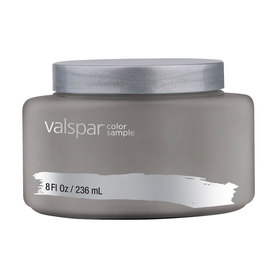
Valspar 8-oz Cathedral Stone Interior Satin Paint SampleOlympic 8-oz Aqua Smoke Interior Satin Paint SampleValspar 10-oz Radiant Orchid Interior Satin Paint Sample

7. POLYACRYLIC TOP COAT – This is a great top coat, it holds up well but is water-based so it’s a good alternative to a heavy oil-based top coat. I have used this on many of my pieces. If the piece is more for looks and isn’t going to experience a lot of bumps and day-to-day wear and tear (I used this on my chalk board frame and the little make-shift bathroom pedestal), I always opt for this product because it is easier to work with and requires less dry time than the oil based gel top coat. I usually purchase the satin finish because I prefer my pieces not to look super shiny, but if you’re piece is going to be touched and need to be wiped down a lot a gloss finish may be better suited to your project.

8. PLASTIC DROP CLOTHS – Here in NC our weather is not too conducive to painting outside, as most of the seasons have one factor or another that will make it pretty difficult (spring – rain, winter -cold, summer -humid etc.). Since multiple coats and a lot of drying time is required for furniture, the chance of you getting a solid 12-24 hours where there is no rain, the temperature is favorable and there is no wind to blow debris or bugs onto your project is pretty much none, haha. Additionally the fluctuating temperature makes it hard for me to paint in my garage since the temp in the garage is pretty much always the same as it is outdoors. Taking this into consideration I do all of my furniture painting projects in my living room or office on a big plastic drop cloth and even though my house will look like a project-zone for a few days it is well worth the finished product! I prefer plastic to canvas drop clothes because I am always paranoid that spilled paint or stain will seep through the cloth and onto the floor, which would not be the case with plastic. When I am finished I simply take it outside shake it out and fold it up to reuse for my next project!

 12-ft x 9-ft Plastic Drop Cloth


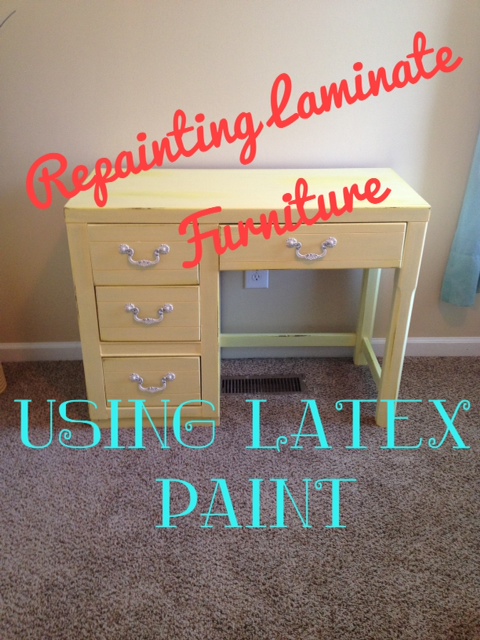
Painting Laminate Furniture Using Latex Paint

securedownload (1)2

Ah good ‘ol laminate furniture. If you don’t own a piece yourself, surely you’ve heard of IKEA (hello particle board wonderland lol), the stuff is everywhere. It’s primarily loved because it is cheap. To put it into perspective, when we were stationed in Pensacola for a hot second before I discovered the wonder of re-doing furniture, we purchased a new wood bedroom set that cost us over $1,200.00 (I kick myself for this now, but whatever ya live, ya learn), meanwhile we were able to furnish an entire condo for less than that when we did so using particle board/laminate furniture. Problems is, the stuff tends not to last and when it does it starts to look even cheaper than it did when it was originally purchased (if that’s even possible lol). If you’re lucky enough to come across a piece that’s in relatively good shape, you MAY be able to save it with a quick re-do (unfortunately I cannot guarantee it will survive your next move, haha). Lucky for us thrifters out there, since particle board or laminate furniture retails cheap, it’s resale value is next to nothing, and for under $100.00 you can probably snatch up quite a few pieces in one shot. Another benefit to redoing super cheap pieces is that it’s a great opportunity to try out funky colors or unique designs, chances are if you mess up or totally hate the item, you’ll only be out a few bucks and a little time 🙂 Check out the before and after pictures of my laminate redos below to get some ideas. Again, I am sorry to say that I do not have step-by-step pictures for this tutorial but I will try my best to explain in detail.

YOU WILL NEED:

  • Latex Paint (I use 8oz sample paints available at the paint counter of your local home improvement stores, I talk about them here)
  • Bonding Primer (read my post on favorite products for brand recommendations)
  • Black Foam Brushes
  • Drop Cloth
  • Clear Top Coat (polyacrylic or gel work great)


HOW I DO IT:

  1. First wipe your piece down with a damp cloth and a little dish soap (it is important that your piece is extremely clean, any residue with make it harder for paint to adhere to the piece), then wipe down again with just a damp cloth. Then remove any hardware, to include pulls or other metal pieces. Once piece is clean you are ready to prime.
  2. Bonding primer is some heavy stuff, make sure you open the windows because any oil based paint is going to be rough on the senses lol. Make sure you’re wearing a mask, just those little disposable doctor looking ones will do. Start by painting an even coat onto your piece, it is going to go on super thick and it will look awful, full of brush strokes and uneven, this is fine, this primer is just to help the paint adhere to the piece as well as cover any existing imperfections, you will not see it once the paint goes on. After the piece has been covered in a coat of bonding primer allow it to dry for several hours (generally my rule is to wait 12-24 but for the primer you need not wait so long).
  3. Now you are ready to begin painting. Use a foam brush to carefully apply a coat of paint to your piece. After the first coat is complete allow 12-24 hours before applying the next coat. Aside from a good top coat the key to keeping your piece from chipping is lots of dry time! The amount of coats you will need depends on the color paint you are using, for instance when using black you may only need two, but when using a light color you may need up to four. Since the paint you are using is not oil based, feel free to wash the brush in between coats and reuse it!
  4. After the last coat has dried, using a foam brush apply your first layer of top coat, making sure not to leave too many streaks or bubbles behind. To ensure a good protective coating on your piece, I would do three top coats, allowing 12-24 hours dry time in between. If you are using a water based top coat you can wash the brush in between coats and reuse it,, but the brushes are cheap enough that if you feel like using a different one for each coat the whole project will probably only cost you $3.00 in brushes anyway.
  5. Once your piece is finished replace all hardware, either with new pulls or use spray paint to update the old ones. I like to use Rustoleum brand spray paint in a satin finish.
  6. Bask in your cheap-furniture glory! You are finished and are a money-saving, crafty S.O.B :)!!!
 

BEFORE & AFTERS:

lrba

I sought out this piece because I was looking for a small table to act as a sort of entryway table for some dead space in my living room. The piece cost $40.00 and was pretty sturdy, but as you can see was missing some pulls so I purchased new ones from http://www.pullsdirect.com (a great resource for new pulls, just make sure they are the correct size). I used Valspar “Borough” and General Finishes Urethane top coat (also available on Amazon). The piece has held up well, we are constantly bumping into it and placing our keys and other items on it as we walk in the door and it has only gotten maybe a tiny scratch here or there that are not visible. TOTAL COST: ~$55.00

deskba

I had wanted a small desk to go in our “shabby chic” style guest room and this seemed like it would be perfect. I purchased it off of Craigslist for $25.00 (while I was there the guy also tried to sell me his house – weird lol). This piece was pretty strange as it is half real wood and half fiber board, so I did end up doing some sanding on this one. Since it was so cheap and wasn’t going in my main living space I decided to try my hand at distressing this one and it came out pretty good, after painting I simply sanded along the various edges and corners. Good thing I distressed this because this piece did not hold up so well, it has a few chips here and there mostly on the top but you would never notice that it wasn’t part of the distressed look. If you notice, I reused the pulls I removed from the project pictured above so that was a big money saver. The color is Valspar “Hazy Dawn” and the top coat is Minwax Polyacrylic.  COST: ~$28.00

brba

Our guest bathroom is a double dose of suck since it has no nearby linen closet and no storage lol. When I came across this weird Aladdin-looking thing for $15.00 at a local thrift store I knew it would be perfect for the bathroom. I simply removed the front piece and added baskets (purchased on sale at Michaels for $6.99 each). Since our bathroom is beach themed I went with “Sea Air” by Valspar for the color and gave it a Minwax Polyacrylic top coat. This piece has held up great, although being that it is in the guest bathroom it does not see too much action so this is not a very good measure of my painting methods, haha. COST: ~$29.00

bookcaseba

After my girls threw me the best baby shower in the history of ever, I wound up with TONS of books for my tiny unborn P. I had actually bought this bookcase for $5.00 with the intentions of using it for a different project which didn’t work out, so it had been sitting in the garage for months despite my husbands weekly attempts to let him take it to the dump lol. This thing is flimsy as hell and was pretty gross, but I didn’t care because it was $5.00 lol. For the record, I don’t necessarily expect this to survive our next move, but for now it looks super cute in the nursery and you would never know it was such a piece of junk to begin with. I kind of rushed through this one since I was 8 months pregnant and SUPER excited to get it into the nursery lol, however, it has actually held up pretty well, maybe a scratch here or there but nothing on the exterior that can be seen. I matched the blue in P’s bedding using “Angel Eyes” by Olympic (available at Lowes) for the exterior and to switch it up I used my left over “Borough” by Valspar for the interior. COST: ~$8.00